Identify the cause behind a flat loaf
Separate weak flour, excessive water, poor gluten development, over-fermentation, and overproofing instead of treating every spread as the same problem.
Understand your flour, read fermentation by feel, and fix flat, gummy, dense, pale, scorched, or stubborn loaves without abandoning the recipe and starting again.
Plain English. Ordinary ingredients. No expensive bread theatre—and no expectation that your kitchen should behave like somebody else's.
You follow the hydration, knead for the stated number of minutes, wait for the rise, and heat the oven exactly as instructed. Yet the loaf still spreads across the tray, tears at the side, stays gummy in the centre, or comes out with a base dark enough to knock on.
The usual response is to search for a different recipe. That gives you a fresh collection of quantities and timings—but it rarely tells you which part of the previous loaf actually failed.
Every loaf is governed by five connected systems. If you change three of them at once, you lose the evidence. If you learn to isolate one, your next bake can answer a useful question.
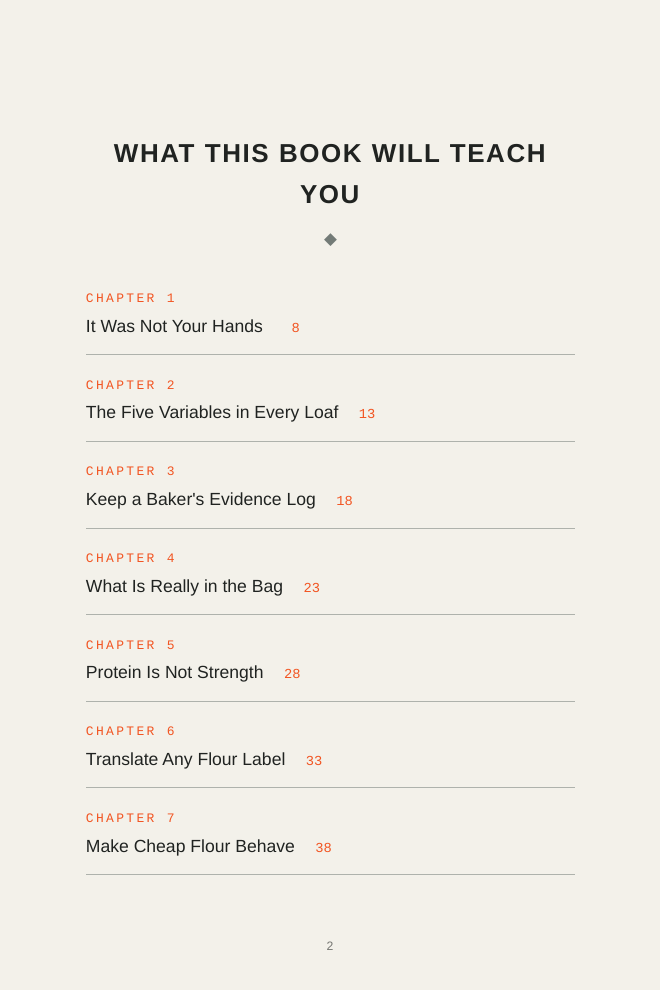
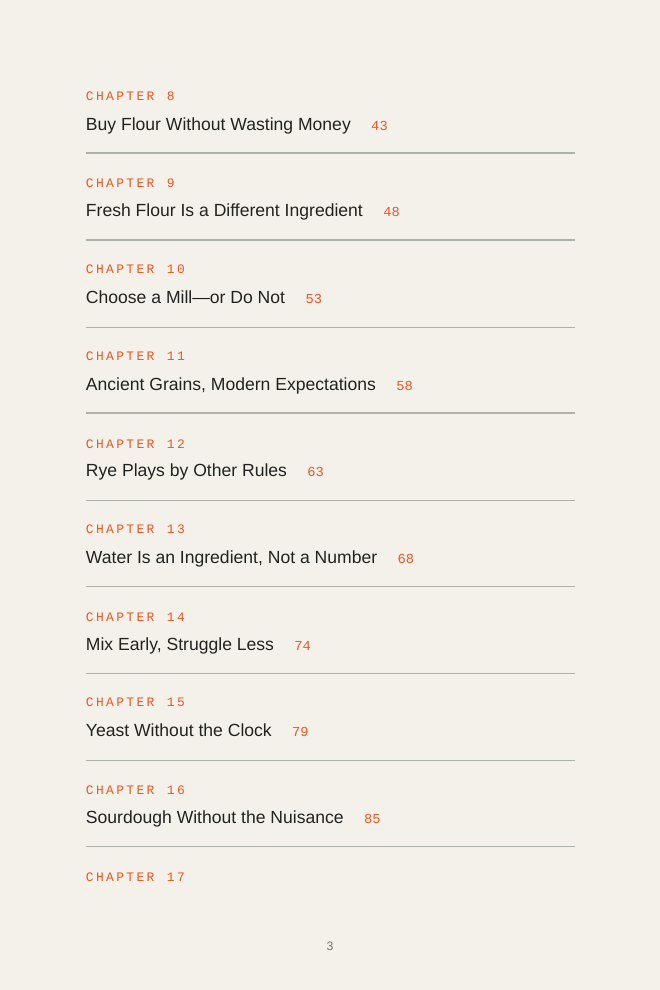
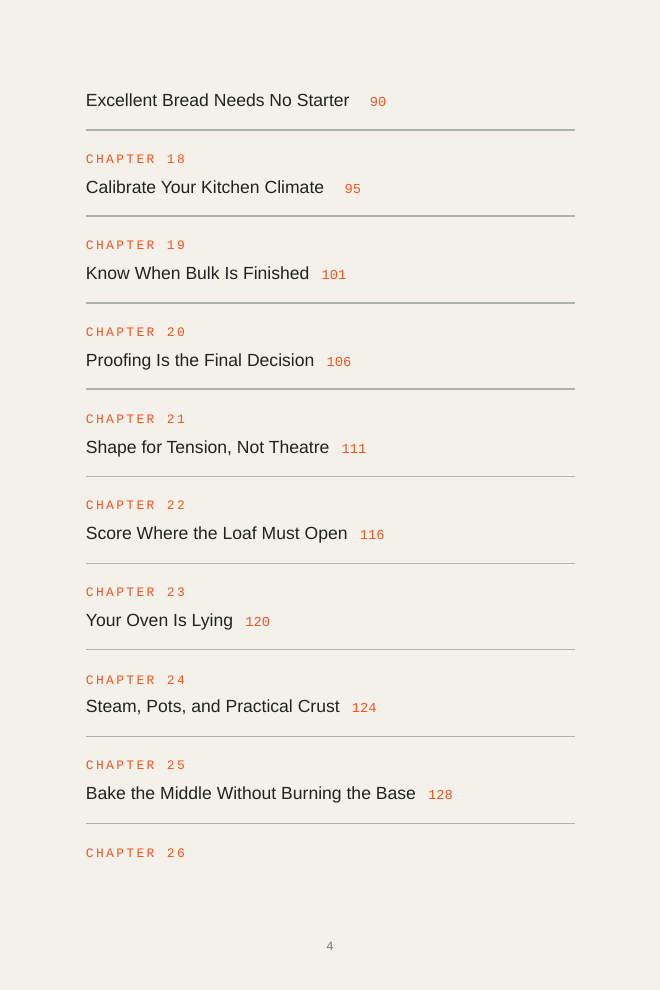
These are real pages from the book. The explanations are practical, the layouts are readable, and the guidance is organised for use during an actual bake—not hidden inside a long personal story.
Not by memorising more rules. By understanding what the dough is doing and choosing one sensible adjustment.
Separate weak flour, excessive water, poor gluten development, over-fermentation, and overproofing instead of treating every spread as the same problem.
Record flour, dough temperature, water, expansion, handling, oven readings, and crumb without turning bread into a laboratory exercise.
Choose likely substitutes by behaviour, protein range, ash content, loaf type, and a sensible first hydration adjustment.
Use measured vital wheat gluten when it is genuinely helpful, with a clear formula and limits that prevent a dry or rubbery crumb.
Understand why a high-protein flour may still resist stretching, drink more water, or produce bread that feels tougher than it needs to.
Use reserve water and practical hand tests to correct stiff or slack dough while keeping the formula under control.
Compare kneading, aggressive initial mixing, slap-and-fold, stretch-and-fold, and stand mixing using tactile stopping points.
Use marked containers, edge bubbles, surface shape, elasticity, aroma, jiggle, and actual expansion to decide when bulk is finished.
Maintain one small refrigerator-kept starter with weekly feedings, then wake it before baking and use the discard sensibly.
Choose between poolish, biga, sponge, and lower-yeast methods according to schedule, flavour, texture, cost, and flexibility.
Test dial accuracy, map hot spots, account for loading heat loss, choose a rack position, and bake the centre without burning the base.
Redirect slack, torn, badly shaped, or over-fermented dough into a loaf pan, focaccia, or another useful form instead of forcing a showpiece boule.
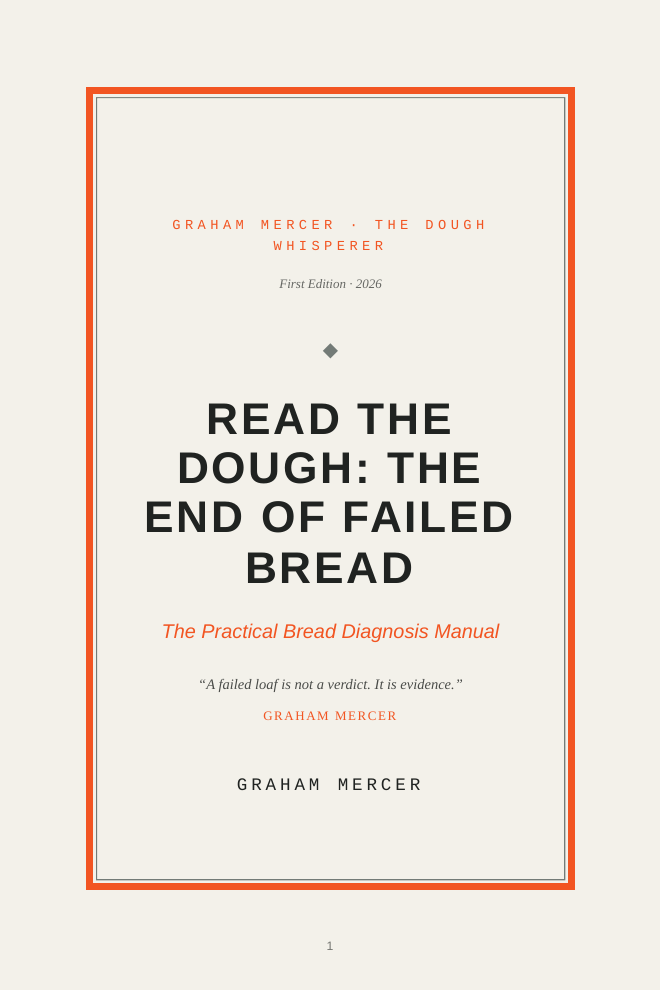
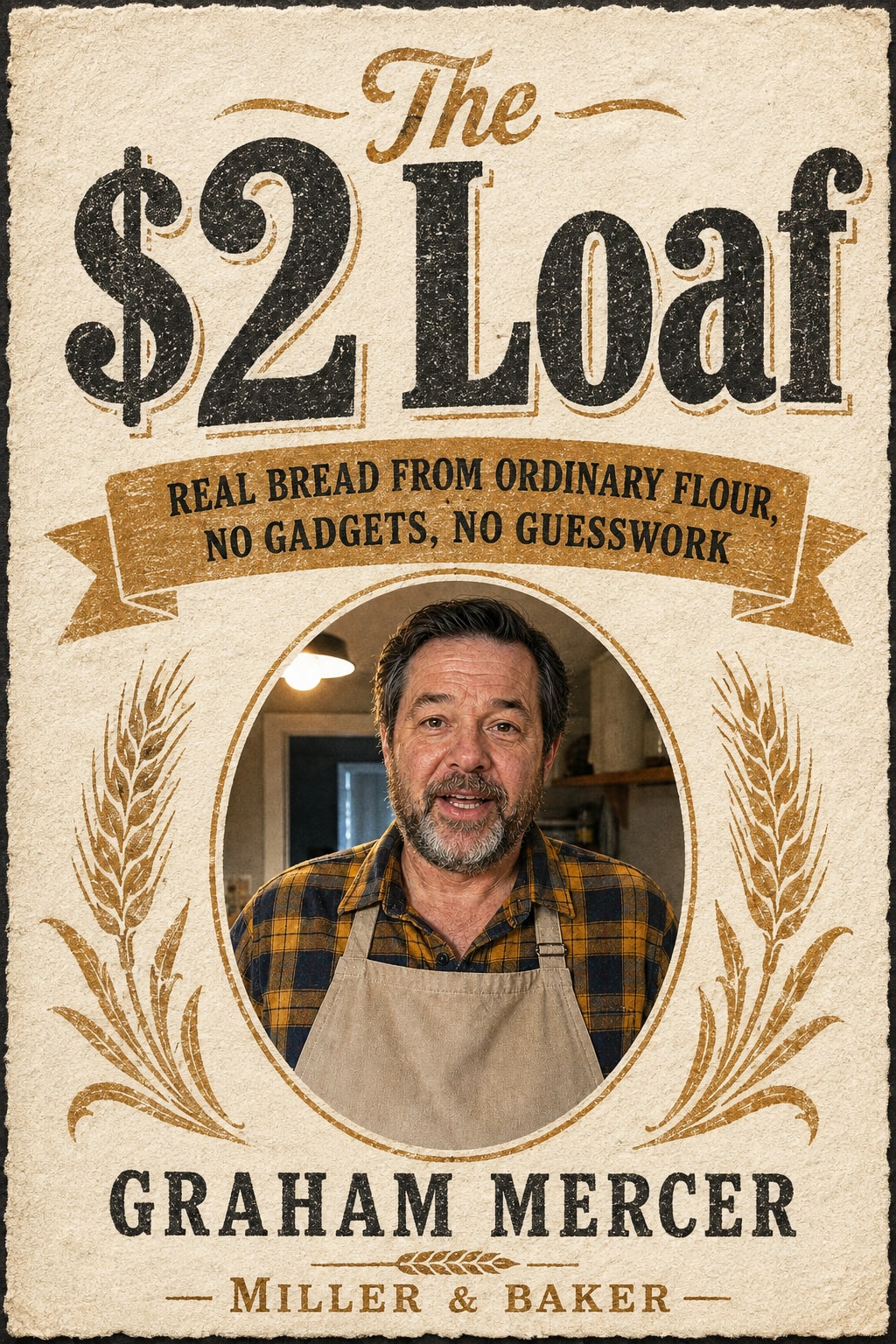
The Practical Bread Diagnosis Manual by Graham Mercer.
$14
One payment. Instant PDF access. Read it on a device or print the pages you want beside the oven.
First Edition · 2026 · Written in clear English for practical home baking
Read the Dough begins where ordinary recipe books tend to stop: the moment the loaf does not behave as promised.
It explains why apparently identical symptoms can have different causes. A dense crumb may come from insufficient fermentation, weak development, excessive whole grain, poor heat penetration, or simply slicing the loaf too soon. More yeast is not the automatic answer.
The book moves from flour and hydration through mixing, fermentation, proofing, shaping, scoring, steam, oven behaviour, diagnosis, and rescue. It gives you a method for making one deliberate change and seeing whether it helped.
There are no miracle claims about sourdough, ancient grain, gluten, or blood sugar. Graham does not present himself as a medical authority, and the book never advises readers to alter medication. Its job is bread: making it more understandable, dependable, and useful.
| When bread goes wrong | Recipe-hopping approach | Read the Dough approach |
|---|---|---|
| The dough spreads | Reduce water at random or buy stronger flour | Check flour absorption, development, fermentation, and shaping tension separately |
| The crumb stays gummy | Bake for an arbitrary extra ten minutes | Check fermentation, internal temperature, loaf size, cooling time, and starch-heavy flour |
| The loaf barely rises | Add more yeast or starter | Measure dough temperature, actual expansion, yeast activity, dough strength, and proof level |
| The base burns | Lower the entire baking temperature | Investigate rack position, pot material, lower-element intensity, shielding, and oven accuracy |
| Sourdough becomes inconvenient | Feed a large jar every day | Keep a small jar refrigerated, feed weekly, and wake it only when needed |
No. The book covers everyday yeast bread, sourdough, poolish, biga, sponge, whole-grain dough, rye, ancient grains, and seed loaves. One of Graham's firmest views is that excellent bread does not require a starter.
Yes. Beginners are often the people most harmed by unexplained rules and rigid schedules. The book defines baker's percentages, flour labels, dough temperature, hydration, fermentation, proofing, and oven behaviour without assuming professional knowledge.
No. Graham explains how to choose and improve inexpensive flour, including when a measured amount of vital wheat gluten can make beginner dough more forgiving. He considers a heavy lidded pot the only specialist tool worth treating as essential for dependable home sourdough.
Yes. It includes four master recipes: an everyday yeast loaf, a low-maintenance sourdough, a tender whole-grain loaf, and a substantial seed loaf designed to avoid a dry, cardboard-like result.
Yes. The book compares practical flour behaviour across UK plain and strong flour, US all-purpose and bread flour, and common European type numbers. It avoids pretending that labels from different countries are exact equivalents.
You will receive instant access to a 188-page PDF. You can read it on a computer, tablet, or phone, or print individual references and worksheets for use in the kitchen. Your purchase also includes free lifetime updates to this edition.
Open the book. Read the sections that match the bread trouble you are having. Look through the flour guidance, diagnosis method, readiness tests, and master recipes.
If you decide it is not useful for you, request a refund within seven days of purchase. There is no need to persuade yourself to keep a bread manual you will not use.
You will also receive future updates to this edition without an additional charge.
A flat loaf is not proof that you cannot bake. A gummy crumb is not a personality defect. A scorched base does not mean you need a more expensive oven.
The loaf has left evidence. Read the Dough shows you how to read it, choose a sensible correction, and make useful bread without turning the process into an expensive ritual.
188 pages. 39 practical chapters. 4 master recipes. One repeatable diagnosis method.
Instant access · Free lifetime updates · 7-day refund period
Get the complete 188-page bread diagnosis manual, four master recipes, lifetime updates, and a 7-day refund period.